
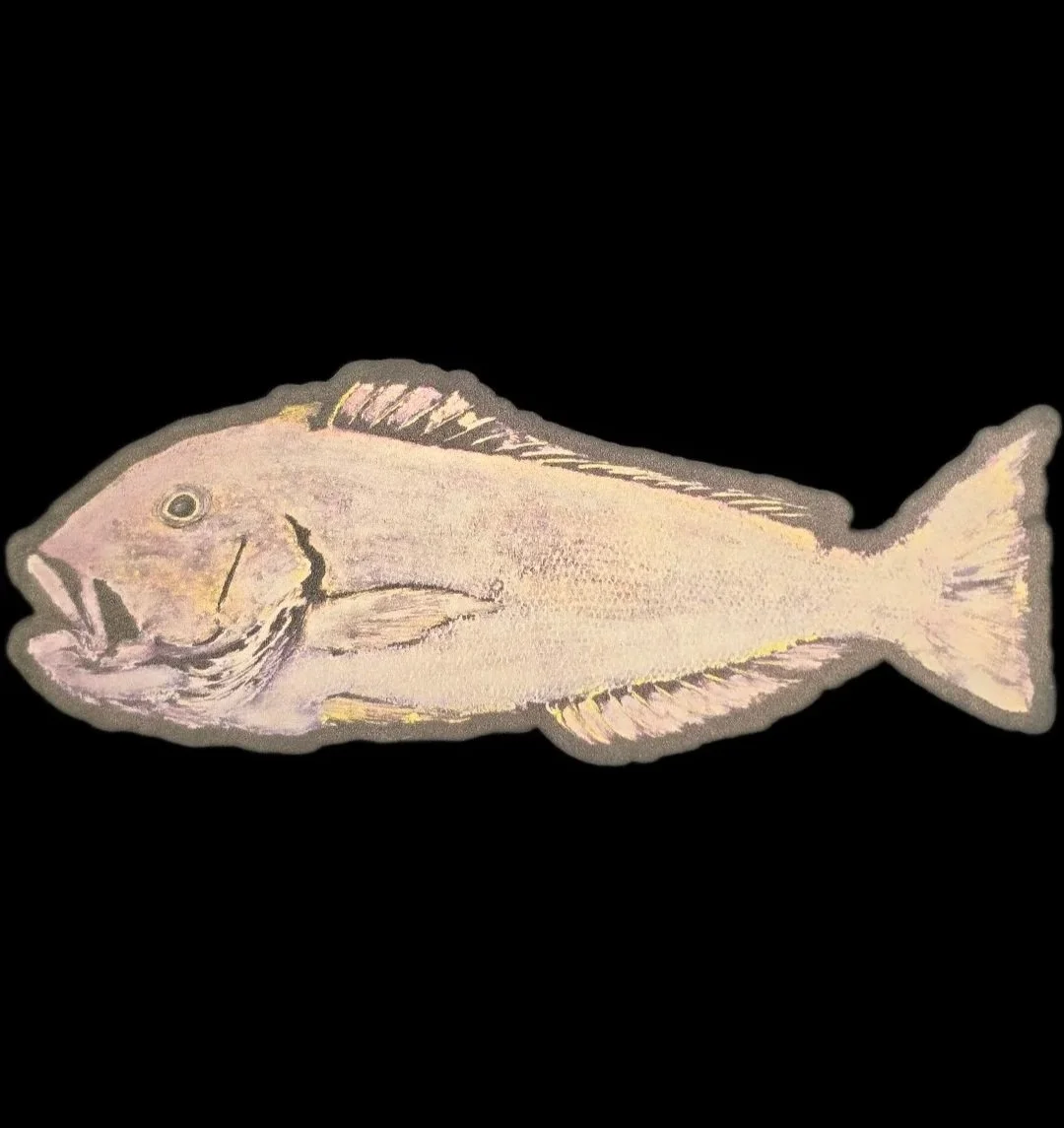

Tile Fish- Glow-in-the-dark Hat Patch
Custom fish print art transformed into glow-in-the-dark hat patches.
Choose your patch! Choose your hat!
Tilefish — quick facts
Common name and groups: “Tilefish” refers to several species in the family Malacanthidae. Notable genera include Malacanthus, Hoplolatilus, Branchiostegus, and Lopholatilus. The golden tilefish (Lopholatilus chamaeleonticeps) and various reef tilefish are among the best-known.
Appearance: Many tilefish have elongated, laterally compressed bodies, large heads, and long dorsal fins. Coloration varies widely by species — from iridescent blues, greens, and yellows in reef species to mottled browns and grays in deeper-water types.
Size: Size ranges by species. Reef tilefish are often small (6–12 inches / 15–30 cm), while deeper-water species like the golden tilefish can reach 30–40 inches (75–100 cm) and weigh 20+ pounds (9+ kg).
Habitat: Tilefish occupy sandy or rubble bottoms, often building burrows or sloping galleries in the substrate. Depth range varies: reef-associated tilefish live in shallower waters (tens of feet/meters), while others inhabit continental shelf and slope depths from around 50 to over 1,000 feet (15–300+ m), depending on species.
Behavior: Many are burrow-dwellers — they excavate and maintain burrows used for shelter and spawning. Tilefish are generally solitary or live in small groups near their burrows, showing site fidelity (they use the same burrow for long periods).
Diet: Carnivorous benthic feeders. Their diet includes small fish, crustaceans (crabs, shrimp), mollusks, polychaete worms, and other invertebrates found on or near the seabed.
Lifespan and growth: Some species are relatively long-lived and slow-growing. The golden tilefish can live several decades, with slow maturation compared to many shallow-water reef fishes.
Fisheries and culinary use: Tilefish are valued as a food fish for their firm, white flesh and mild flavor. They are marketed fresh and frozen. Larger deep water species have historically supported commercial fisheries but can be vulnerable to overfishing because of slow growth and site fidelity.
Predators and ecological role: Tilefish are prey for larger predatory fishes and some marine mammals. Their burrowing activity modifies benthic habitats, providing shelter and influencing sediment structure, which can affect local benthic communities.
Interesting note: Tilefish burrows can be elaborate and long-lived. In some ocean regions, other species use abandoned tilefish burrows for shelter, making tilefish ecosystem engineers in their habitats.
Custom fish print art transformed into glow-in-the-dark hat patches.
Choose your patch! Choose your hat!
Tilefish — quick facts
Common name and groups: “Tilefish” refers to several species in the family Malacanthidae. Notable genera include Malacanthus, Hoplolatilus, Branchiostegus, and Lopholatilus. The golden tilefish (Lopholatilus chamaeleonticeps) and various reef tilefish are among the best-known.
Appearance: Many tilefish have elongated, laterally compressed bodies, large heads, and long dorsal fins. Coloration varies widely by species — from iridescent blues, greens, and yellows in reef species to mottled browns and grays in deeper-water types.
Size: Size ranges by species. Reef tilefish are often small (6–12 inches / 15–30 cm), while deeper-water species like the golden tilefish can reach 30–40 inches (75–100 cm) and weigh 20+ pounds (9+ kg).
Habitat: Tilefish occupy sandy or rubble bottoms, often building burrows or sloping galleries in the substrate. Depth range varies: reef-associated tilefish live in shallower waters (tens of feet/meters), while others inhabit continental shelf and slope depths from around 50 to over 1,000 feet (15–300+ m), depending on species.
Behavior: Many are burrow-dwellers — they excavate and maintain burrows used for shelter and spawning. Tilefish are generally solitary or live in small groups near their burrows, showing site fidelity (they use the same burrow for long periods).
Diet: Carnivorous benthic feeders. Their diet includes small fish, crustaceans (crabs, shrimp), mollusks, polychaete worms, and other invertebrates found on or near the seabed.
Lifespan and growth: Some species are relatively long-lived and slow-growing. The golden tilefish can live several decades, with slow maturation compared to many shallow-water reef fishes.
Fisheries and culinary use: Tilefish are valued as a food fish for their firm, white flesh and mild flavor. They are marketed fresh and frozen. Larger deep water species have historically supported commercial fisheries but can be vulnerable to overfishing because of slow growth and site fidelity.
Predators and ecological role: Tilefish are prey for larger predatory fishes and some marine mammals. Their burrowing activity modifies benthic habitats, providing shelter and influencing sediment structure, which can affect local benthic communities.
Interesting note: Tilefish burrows can be elaborate and long-lived. In some ocean regions, other species use abandoned tilefish burrows for shelter, making tilefish ecosystem engineers in their habitats.